SOC 2 vs ISO 27001 for Enterprise AI SaaS: What Buyers Should Check
Understand the differences between SOC 2 reports and ISO 27001 certification, plus the AI-specific security and evidence checks enterprise buyers should make.
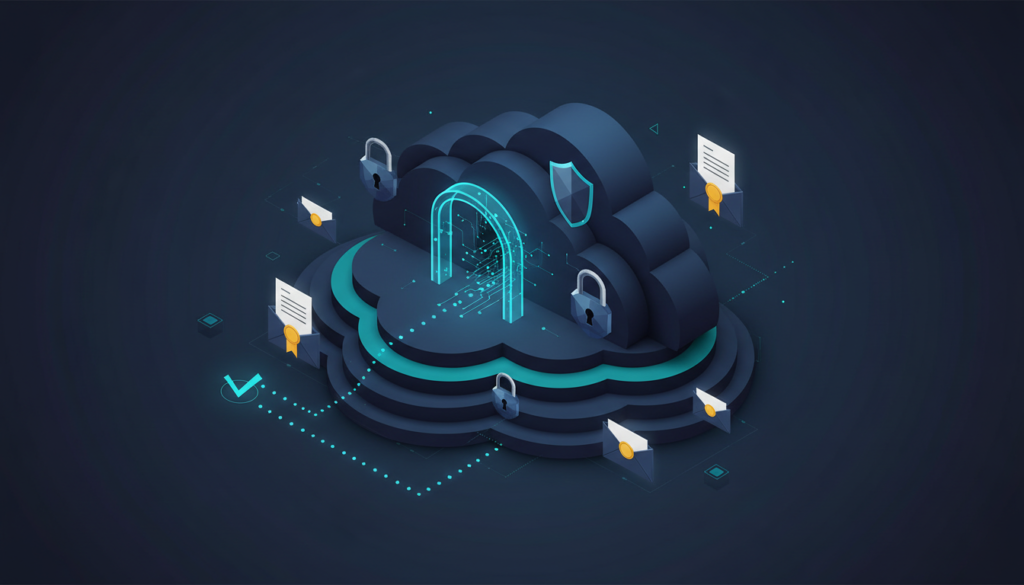
Original DeepTech conceptual illustration; not an issued certificate or security audit result.
When a vendor sells enterprise AI software as a service (SaaS), procurement teams often ask whether it has SOC 2 or ISO/IEC 27001. Both can provide useful security assurance, but they answer different questions and neither is proof that every AI-generated answer or automated agent action is reliable. A careful buyer should evaluate the scope, dates, controls, exceptions and independent evidence behind the claim.
SOC 2 is an assurance reporting framework based on the AICPA Trust Services Criteria. ISO/IEC 27001:2022 sets requirements for an information security management system, as described by ISO. The two can complement each other in an enterprise buying process; neither should be confused with a product-level certification of AI accuracy.
Editorial disclosure: this is an original explanatory buying guide, not legal advice, an audit opinion or an endorsement of a vendor. The featured image is conceptual artwork, not a real certification mark.
What does SOC 2 examine?
SOC 2 reports describe the controls at a service organization relevant to the applicable Trust Services Criteria. The criteria address security and may also cover availability, processing integrity, confidentiality and privacy, depending on the scope of the engagement. Buyers should look at which criteria and services the report actually covers, not simply the words “SOC 2” in a vendor’s sales brochure.
A Type 1 report concerns the design of specified controls as of a point in time, while a Type 2 report also addresses their operating effectiveness over a defined period. This distinction is important when a young AI service has rapidly changed its model providers, integrations or infrastructure. A report can be valid within its defined scope while not describing every newer component of the customer’s proposed deployment.
What is ISO/IEC 27001?
ISO/IEC 27001:2022 defines requirements for establishing, implementing, maintaining and continually improving an information security management system (ISMS). It emphasizes structured risk management across organizational processes, people and technology. Certification is generally assessed by an external certification body against an identified scope.
The certificate’s scope matters. A company may be certified for a particular office, hosting service or business unit while a new AI product operates partly outside the covered boundaries. Buyers should confirm the certificate’s validity, issuing body, relevant locations and whether the proposed service falls within scope. It would be misleading to assume that certification proves a specific model is safe from prompt injection or produces factually correct answers.
Which is better for an AI SaaS buyer?
There is no universal winner. A SOC 2 Type 2 report can help a buyer understand evidence of selected operational controls over a period. ISO/IEC 27001 certification can help establish that an organization operates a structured security management system under a defined scope. An international customer may request both, or may accept one alongside other evidence, depending on contracting requirements and business risk.
The right evaluation starts with the type of data handled and the consequences of a service failure. A simple internal productivity tool and a platform allowed to update customer financial records need different controls. Buying a logo rather than checking the scope of assurance is a poor security strategy.
Why AI agents need additional controls
A traditional SaaS service executes defined functions; an AI agent may dynamically select tools based on language inputs and data retrieved from external sources. The OWASP Top 10 for Agentic Applications 2026 highlights risks specific to systems that can plan and act across connected services. Examples include manipulated instructions and excessive permissions.
Ask whether AI-specific threats have been evaluated within the vendor’s control environment. Test least-privilege access, human approval before consequential actions, prompt-injection resistance, logging, protection of secrets and separation between customers. A general security report may be useful, but it does not remove the need for workflow-level testing. Our enterprise AI agent deployment checklist explains how to assess those actions in a bounded pilot.
What documents should a vendor provide?
A practical procurement pack may include a recent SOC 2 report or applicable ISO certificate, a description of audit scope, a list of sub-processors, hosting regions, data-retention terms, incident handling policies, authentication options, role controls, backup and recovery commitments, and results from relevant technical tests. Some documents are confidential and legitimately shared under a non-disclosure agreement.
For high-risk workflows, buyers should also request a data-flow diagram and a clear account of what information is sent to model providers, whether prompts are stored, and how the organization can export or delete its data. The strongest assurance case combines organizational controls with evidence from the intended deployment configuration.
Where do privacy and AI regulation fit?
Information security, data protection and AI-specific legal obligations overlap but are not interchangeable. An organization processing personal data in the European Union needs to assess relevant data-protection requirements independently of a SOC 2 report or ISO certificate. The EU AI Act also imposes different obligations depending on the system and the roles of provider and deployer.
For legislation and dates, rely on current official texts rather than a fixed checklist copied between years. The European Commission AI Act overview is a starting point for legal review. This article is not a legal determination that any particular SaaS service falls within or outside a regulated category.
A seven-question security evaluation
- Which exact products, entities and operating locations are covered by the report or certificate?
- Who performed the assessment, for which dates and using which criteria?
- Were exceptions, exclusions or material security incidents disclosed?
- Which model providers, cloud services and sub-processors handle customer information?
- Are agent tool permissions, approvals and audit records enforced outside model-generated text?
- Can customer records and monitoring traces be exported, retained and deleted under contract?
- Has the exact proposed workflow undergone independent or customer-observed security testing?
How to use assurance evidence without overclaiming
For a vendor comparison, build a table of scope, evidence, gaps and residual risk. Do not award a blanket “secure” rating just because a certificate exists. Document which controls the buyer must provide, which the cloud provider supplies and which the AI service itself operates. Shared responsibilities can create gaps even when every participant has a security program.
Security assurance is one pillar of responsible procurement, not the whole business case. Buyers should also assess operational cost, performance and the ability to audit failures, as detailed in our enterprise AI observability guide. The decision should rest on demonstrated controls and tested outcomes, not marketing promises of complete compliance or zero risk.
Architectural context: Security assurance is one component of enterprise AI procurement. SOC 2 reports and ISO/IEC 27001 certification address different aspects of organizational controls. Explore their role alongside operational validation and financial evaluation in our Enterprise AI Deployment Guide.